
Research Areas
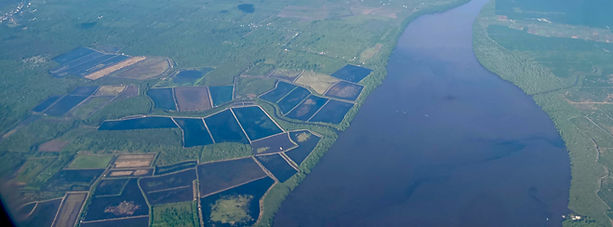
Our past and ongoing research has focused on the fate of vulnerable soil carbon stocks with climate and land disturbance, transformations of carbon and nitrogen along the land-ocean continuum, and the implications for marine and atmospheric carbon reservoirs.
To reduce the uncertainty in model predictions of these changing fluxes, we investigate controls on the breakdown of organic molecules by microbes and sunlight, use radiocarbon and high-resolution mass spectrometry to fingerprint their source, and quantify aerial rates over hourly to annual timescales.
To help mitigate the impact of disturbance, we study the mechanisms that enhance nature-based solutions.


Past Projects
Agriculture on Tropical Peatlands
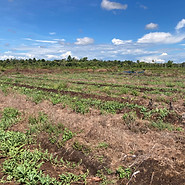
Many disturbed tropical peatlands are currently managed for agricultural production. In Southeast Asia, disturbed peatlands are managed on large scales for palm oil production, which is a commodity with increasing global demand, and by smallholder farmers for mixed agriculture. Our past and ongoing research focuses on identifying sustainable peatland restoration and agricultural management practices than promote livelihood while reducing carbon emissions.
Supported in part by: Hoyt, Perryman, Bowen, & Shahan, King Center Global Development Research Funding, Stanford University, Community-led sustainable agriculture to support peatland restoration in Indonesia.
Perryman, Bowen ... Chan*, et al (2026). Impact of peatland rewetting on methane cycling: Evidence from a community project in West Kalimantan, Indonesia. American Geophysical Union Annual Meeting, San Francisco, CA.
Photo-Microbial Interactions
Microbes play a major role in the turnover of carbon and nitrogen in soil and aquatic ecosystems. In sunlit aquatic ecosystems, photochemical reactions may change the chemical properties of dissolved organic molecules and their lability to microbes. Our past research identified the major pools and pathways that impact microbial use of carbon and nitrogen, including how sunlight exposure breaks down larger aromatic-rich organic molecules into smaller pieces that are more readily respired by stream microbes and how the photodegradation of organic nitrogen can be fast enough to supply ammonium to primary producers in oligotrophic lakes. Our ongoing research focuses on the timescales over which products are formed during photodegradation and how these change along environmental gradients (e.g., redox, light).
Supported in part by: Bowen, Susan Lipschutz Award for the Support of Women in Academia, University of Michigan.

Bowen et al (2026). Photochemical production of ammonium from dissolved organic nitrogen in arctic surface waters. Arctic Science, doi:10.1139/as-2025-008.
Bowen et al (2020). Photodegradation disproportionately impacts biodegradation of semi‐labile DOM in streams. Limnology & Oceanography, 65(1).
Aquatic Fate of Permafrost

As the Arctic warms and permafrost soils thaw, the millennia-aged carbon stored in permafrost soils is becoming vulnerable to oxidation and release to the atmosphere. In this project, our research investigated the fate of permafrost organic molecules in freshwaters, which was missing from future projections of carbon loss. Results from this study showed that the degradation of permafrost organic molecules in arctic lakes and rivers may contribute an additional ~14% of carbon loss on top of existing model estimates.
Supported in part by: NOSAMS Graduate Student Internship Program, Woods Hole Oceanographic Institution, Radiocarbon content of carbon dioxide photo-produced from permafrost dissolved organic carbon.
Bowen et al (2020). Arctic amplification of warming strengthened by sunlight oxidation of permafrost carbon to carbon dioxide. Geophysical Research Letters, 47, e2020GL087085.